
Before the First Bite: How a Dish Begins to Tell Its Story
- Barboza, Al
- Jul 27
- 3 min read
Long before a guest tastes a dish, the experience has already begun.
The color of a sauce, the placement of an ingredient, the contrast between something crisp and something delicate—each detail creates an expectation. A thoughtfully composed plate does more than present food beautifully. It offers the first glimpse of the story behind the course.

Plating Begins With the Ingredient
Great presentation is not about covering a plate with decorative elements. It begins by understanding what deserves attention.
The main ingredient should remain the focal point. Everything around it—sauce, garnish, texture, and negative space—should help express its character rather than compete with it.
A perfectly cooked piece of fish may need only a bright seasonal purée, a delicate herb, and a crisp element to create contrast. A slow-braised dish may call for deeper colors, warmer textures, and a composition that feels generous and comforting.
The plate follows the food, never the other way around.

The Difference Between Decoration and Intention
Every element placed on a plate should have a purpose.
A garnish should contribute aroma, flavor, or texture. A sauce should guide the guest through the dish. Even the empty areas of the plate allow the central ingredients to breathe.
This sense of restraint is often what makes a course feel refined. Adding more does not necessarily create a more memorable plate. In many cases, knowing what to leave out is just as important as knowing what to include.
The objective is not perfection for its own sake. It is clarity.

Creating Contrast
The most compelling dishes invite discovery.
Something creamy becomes more interesting beside something crisp. A rich ingredient gains balance through acidity. Deep, roasted colors can be lifted by fresh herbs or seasonal vegetables.
These contrasts influence both flavor and presentation. They help the eye understand the dish while preparing the palate for what comes next.
Color, height, shape, and texture become part of the same composition. When they work together, the plate feels natural—even when every detail has been carefully considered.

A Reflection of Time and Place
A thoughtfully prepared course can also reveal where it came from.
Seasonal produce, regional flavors, family traditions, and personal memories can all appear within a dish. Some of the world’s most celebrated chefs use plating not simply to create beauty, but to communicate culture and emotion through food.
The presentation may be contemporary, but the story behind it can be deeply familiar: a flavor remembered from childhood, an ingredient discovered while traveling, or a classic preparation interpreted through a new perspective.
That connection gives a dish identity.

The Final Moment in the Kitchen
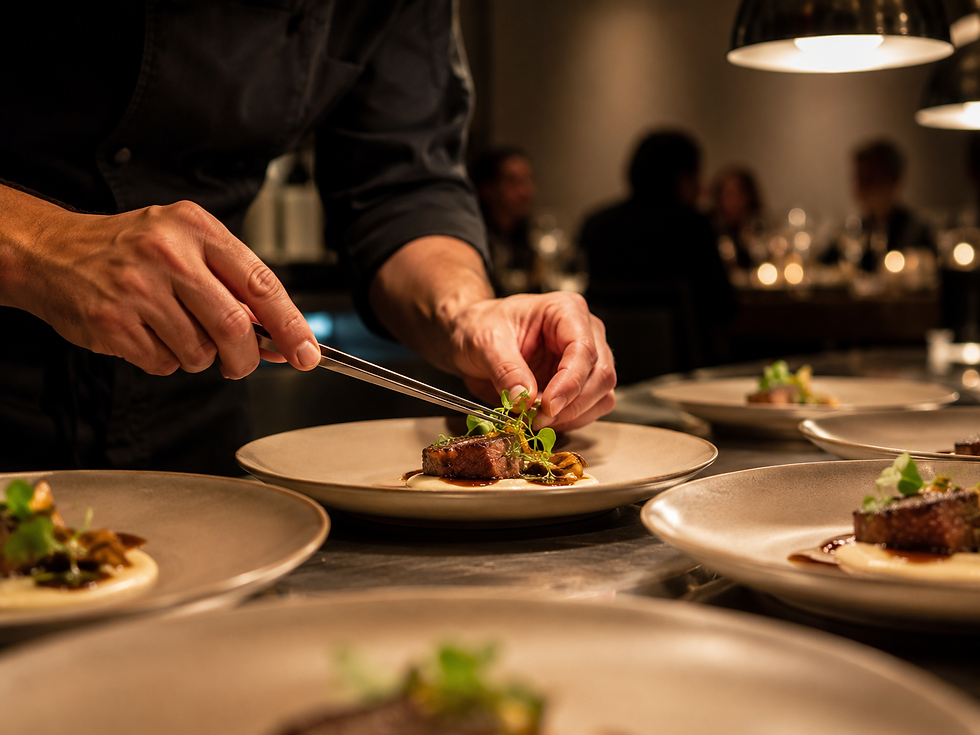
Plating is one of the last steps before a course reaches the table, but it is also one of the most demanding.
Temperature matters. Timing matters. The sauce must have the right consistency. Crisp ingredients must remain crisp. Every plate served to the table should carry the same balance and intention.
In a private dining experience, this moment unfolds only steps away from the guests. The finishing of each dish becomes part of the evening’s rhythm: the quiet focus in the kitchen, the anticipation at the table, and finally, the arrival of the course.
More Than a Beautiful Plate
Presentation does not replace flavor, technique, or quality ingredients. It brings them together.
A beautiful plate creates curiosity. A thoughtful plate offers direction. A memorable plate makes the guest pause for a moment before taking the first bite.
And in that brief moment, the dish has already begun to speak.

Comments